
$186M
Funding raised
 FemTech
Consumer Device · FemTech · IoT
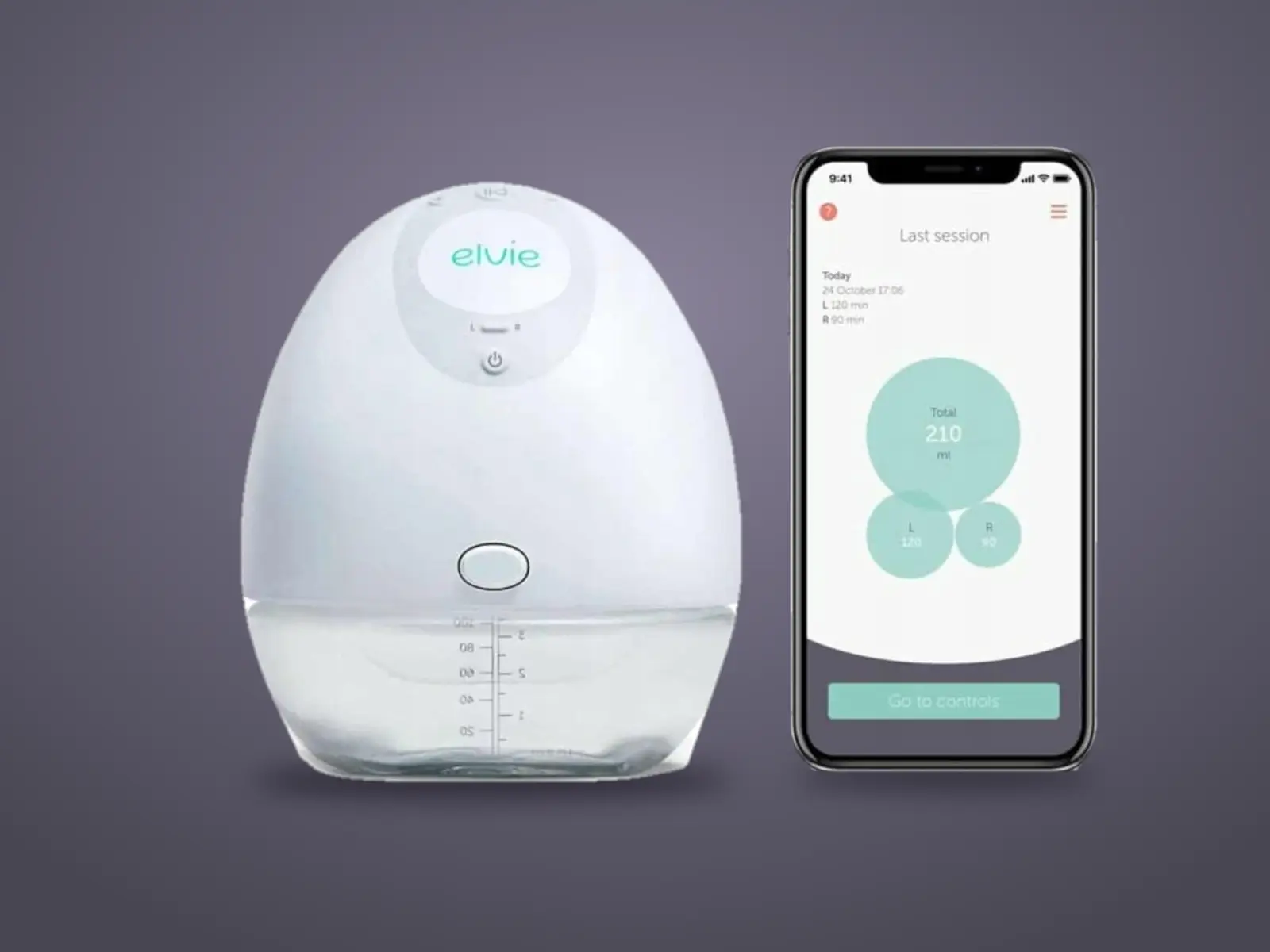
The app behind the world’s first wireless breast pump, shipped across iOS and Android
- 20+ industry awards in the debut year
- $ 186 million raised to date
- From concept to maintenance
Monterail has worked with founders at every stage, from first brief to mid-build rescue. We know what keeps products off the market, and build around those risks from sprint one.
Trusted by healthcare leaders






Recognized by Financial Times FT 1000 and Deloitte Technology Fast 50.
DELIVERED AND CLEARED
Funding raised
FemTechConsumer Device · FemTech · IoT

device generations co-developed
Medical deviceMedical Device · FDA Class II · IoT

Chronic pain relief wearable
WearableWearable · CE-marked · FDA BDD
Pharma · Digital Platform · Enterprise
Enterprise platformPharma · Digital Platform · Enterprise
YOUR HEALTHTECH EXPERT

Collaboration with Monterail was wonderful because they got the job done to create the product, but also, they know how to reach out to the end-user through the product. Together, we empowered mothers to feel safe and comfortable doing one of the most natural things for humankind.
Tania Boler — Founder
Collaboration with Monterail was wonderful because they got the job done to create the product, but also, they know how to reach out to the end-user through the product. Together, we empowered mothers to feel safe and comfortable doing one of the most natural things for humankind.
Tania Boler Founder

I was impressed by Monterail’s services. Not only did they bring their technical expertise to the table, but they showed their sensitivity to the particular cultural context of this project by asking a lot of meaningful questions early on.
Alexander Hoffman — Head of Digitization Africa
I was impressed by Monterail’s services. Not only did they bring their technical expertise to the table, but they showed their sensitivity to the particular cultural context of this project by asking a lot of meaningful questions early on.
Alexander Hoffman Head of Digitization Africa

I am really glad that Monterail’s reliable team has helped us to squeeze our product to the fullest. An experienced software and product team is crucial to comply with medical regulations.
Michael Foerster — Co-Founder & CTO
I am really glad that Monterail’s reliable team has helped us to squeeze our product to the fullest. An experienced software and product team is crucial to comply with medical regulations.
Michael Foerster Co-Founder & CTO


What impressed me the most about the team is how quickly they grasped what we are trying to achieve, and how they supported us to bring our vision to life. We have a world-class product and we wouldn’t have gotten to this point alone. Monterail was the perfect partner to get us here.
Alon Lits — Co-Founder
What impressed me the most about the team is how quickly they grasped what we are trying to achieve, and how they supported us to bring our vision to life. We have a world-class product and we wouldn’t have gotten to this point alone. Monterail was the perfect partner to get us here.
Alon Lits Co-Founder
Key healthcare product challenge
Most healthcare founders defer the hard decisions and face them again at later stages. Either mid-submission, during due diligence, or under audit, when changing course costs the most.
Where you are now determines what you need next.
In 15 years, I’ve seen more rebuilds than I’d like to count. It always costs more than the original build, both in time and money. And almost every time, it was avoidable.
Piotr Zając— HealthTech Director, Monterail
Where are you in your healthcare product journey?
Whether you’re building a SaMD or a companion app, where you land on that line shapes every technical decision that follows. We help you figure that out early so you can build with clarity from the start.
Technical debt before regulatory submission is the most expensive kind. Having worked with teams already deep in development, we know how to fix what’s not working so you can get to submission without starting over.
Our focus
An idea gets you started but evidence gets you funded, cleared, and to market. Monterail’s discovery process results in a validated product brief covering regulatory path, architecture, and UX prototype, so you invest in the right product from day one.
Clinicians need to trust AI output. Regulators need to trace it. From computer-vision prototypes to clinical decision support, we build AI into health products with the audit trails, explainability documentation and model governance that get it through review.
A health device is only as good as the systems behind it. Since 2012, we’ve shipped integrations across BLE, Wi-Fi, sensor fusion, IMU, Apple Watch, iOS/Android, and IoT infrastructure. Your device will work the way clinicians and patients need it to, and holds up under regulatory scrutiny.
Healthcare doesn’t run on patient apps alone. We build tools that work across the full patient–payer–provider triad: from clinical decision support and claims workflows to the operational infrastructure that keeps hospitals, insurers, and health networks running behind the scenes.
Regulatory standards we follow
Products that pass regulatory review the first time are built that way from sprint one. Our standard is that regulatory documentation is written as development happens, so nothing needs to be reconstructed before submission.
For regulated products, we deliver design controls, a traceability matrix, IEC 62304-compliant lifecycle records and audit-ready data architecture. Your regulatory team gets what they need to submit, on time.
 Need regulatory strategy too? We plan your FDA and EU MDR pathway alongside development with our regulatory partner, MAE Group.
We build to EU MDR, which sets a stricter software bar than FDA SaMD. Our clients sell in the US, Europe, the Middle East and Africa, with products that include FDA Class II devices, CE-marked medical devices and an FDA Breakthrough Device Designation.
EU AI Act high-risk obligations for AI-enabled medical devices are being phased in under an evolving timeline, most recently amended by the EU's 2026 Digital Omnibus package. We track these shifting deadlines so our clients don't have to.
We've been on both sides of due diligence, as founders and as investors' evaluators. That shapes which architectural shortcuts we refuse to take.
Standards we build to
Healthcare software development process
Many of our partnerships run for years, some for over a decade. From the first product decision to long-term maintenance, Monterail supports you at every step, whether you come with just a brief or with development already underway.
Define business goals, user needs, regulatory path.
UI/UX, user flows, interactive prototypes.
Build core features, hardware integration, APIs.
QA, clinical validation support, staging.
Live release, monitoring, go-to-market support.
Long-term evolution, updates, compliance upkeep.
Enterprise healthcare rapid prototyping
83% of companies rank innovation as a top-three priority. Only 3% describe themselves as innovation-ready. Most of those briefs never become anything.
The gap is in procurement cycles and six-month discovery phases. We move faster than that by operating as a health innovation lab. One defined use case, four weeks, and a working prototype your decision-makers can base a go/no-go call on.

Technical support and development for connected, app, and high-tech concepts is particularly valuable for us. Monterail got the job done well, the brief was met, and the prototypes work.
Nick Sardar — Senior Manager
Technical support and development for connected, app, and high-tech concepts is particularly valuable for us. Monterail got the job done well, the brief was met, and the prototypes work.
Nick Sardar Senior Manager
How we build regulated health products for our clients, and how founders, clinicians and product leaders bring digital health to market.
Our latest industry talk, with Piotr, our HealthTech Director, and Krzysztof, our Head of Design.
HIPAA
× FDA
A practical map of which healthcare regulations touch your product.
Piotr Zając
SaMD
× FDA
SaMD FDA submissions start with architecture.
Piotr Zając
Wearable
data
Discover what you can build on Apple Health, Health Connect, and Oura data.
Piotr Zając
Explore everything
Let's Talk.
Schedule a 30-minute call to discuss your healthcare product needs. Share your name, work email, and one line about what you’re up to.
Digital health is the use of software, connected devices and data to prevent, diagnose, treat or monitor health conditions, and to make care delivery more efficient. The main types of healthcare software are patient-facing apps, companion apps for wearables and connected medical devices, Software as a Medical Device (SaMD), clinician tools and platforms that exchange data with EHR systems.
Both. Over 15 years, we’ve worked with startups, scale-ups and corporate R&D teams. Startups usually come to us to validate an idea, build an MVP, or get ready for investor due diligence. Enterprise teams bring us in to prototype new products quickly or to add regulated-software capacity to in-house teams. Our portfolio includes companies of all sizes: Elvie, Docplanner, Eargo, Convatec and Merck KGaA.
A typical health project runs through six phases: Discovery & Planning, Design & Prototyping, Development & Integration, Testing & Validation, Deployment & Launch, and Maintenance & Optimization. Scope, roadmap and regulatory milestones are set upfront. Delivery then runs in two-week sprints with regular demos, so you see working software throughout. For regulated products, a design control process aligned with ISO 13485 and IEC 62304 runs inside the same phases.
Yes, we build software to HIPAA requirements from the architecture stage. That includes encryption of protected health information in transit and at rest, role-based access control, audit logging and secure, compliant hosting. For European products, we apply the same approach to GDPR, and we also build to ISO 27001 information security practices.
Yes. We’ve worked on 15+ regulated medical devices and build to IEC 62304, ISO 13485, EU MDR, and FDA SaMD requirements. We work as a subcontractor to you as the Legal Manufacturer, usually inside your existing quality management system, and scale documentation rigor to your software safety class (A, B or C). You get audit-ready, software-scoped documentation that plugs into your technical file. For AI-enabled devices, we also build to EU AI Act requirements. Regulatory strategy and submissions are handled by you or by our regulatory partner, MAE Group.
It depends mainly on whether your product is a wellness tool or a regulated medical device. Based on our project experience, rough ranges are $30K–80K for a wellness app without medical claims, $150K–400K for a telemedicine MVP, $400K–1M+ for an EHR-integrated platform, and $500K–2M+ for FDA-regulated medical device software. The biggest cost drivers are regulatory scope, integrations (EHRs, wearables, devices), AI features and clinical validation. A Discovery phase turns your idea into a detailed estimate and roadmap.